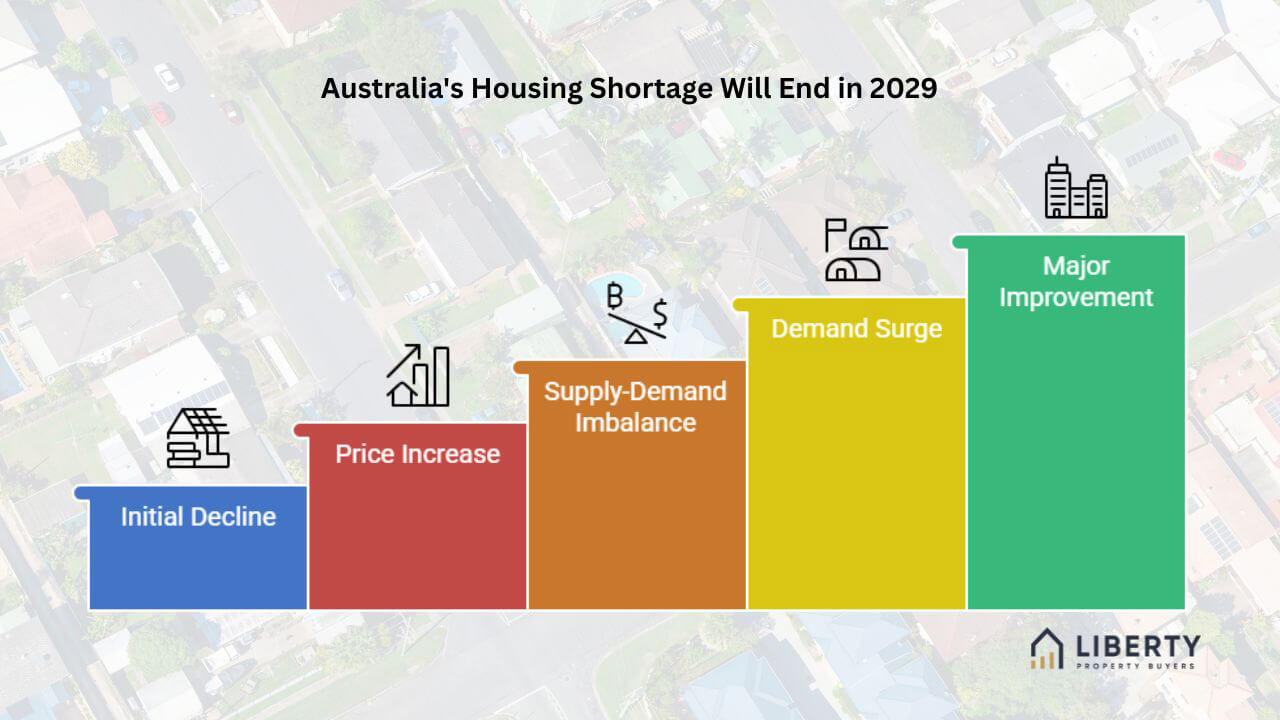
Australia’s Housing Shortage Will End in 2029
Quick Highlights of Australia’s Housing Shortage
- Housing shortage in Australia declined by 47,000 homes in 2024–2025.
- The price of the property is still going up.
- We cannot expect a major improvement until 2028–2030, not in 2026.
- In 2026, supply will not meet the requirements created by immigration.
- The demand has been increasing after the new 5% deposit schemes.
Everywhere you go, people have been asking: When will the property market slow down? Prices have been going high, and housing has become expensive. What Next?
To really understand where the current state of the property market is and what will happen next, we need to study beyond price charts, reports and news because they only let us know the surface of what is happening in the property market; they reflect outcomes, not the causes behind them. We need to look deeper into supply, demand, and the economic forces that influence the property market. This deeper insight allows investors and buyers to make informed, progressive decisions instead of simply reacting to past trends or news headlines.
What Really Drives Property Prices?
Instead of asking when the market will fall, why not understand how prices change the way they do?
When we magnify and look into the layers of the economy, we start to witness how different factors, population increment, construction rates, interest rates, and credit availability influence housing prices.
In 2020, during the period of COVID-19 panic, a bold prediction by economists was made that Australia would go through one of the biggest property growth phases in history. Which eventually happened to be right. During this time, interest rates went down, the government provided generous incentives, and redirected spending from travel to home upgrades. So, the housing demand in Australia went up to unprecedented levels. This combination of affordability, strong demand, and limited supply pushed property prices sharply upward, proving the economists’ prediction of a major growth phase to be true.
Why Prices Continued to Increase?
When the value of money drops during inflation, the value of tangible assets like property goes up because, as money loses purchasing power, the assets like property retain or increase their real value, which makes them worth more in nominal terms. For example, if we buy a home for $150,000 and the value of money drops, that same home could be worth $350,000 in just a few years, while our mortgage debt may remain more or less the same.
Economists call this state the wealth effect. As people feel richer, they spend more, borrow more, and drive prices higher because when people witness the value of their assets go up, they feel more financially secure and confident. This sense of security and confidence leads them to spend and borrow more, which pushes the overall demand in the economy and prices even higher.
People who understand this dynamic and position early benefit the most, and those who wait for the value of money to drop often end up buying later at higher prices.
Will We See an Improvement in the Property Market?
First and foremost, we must look deeply into Australia’s housing supply and demand imbalance.
According to the National Housing Supply and Affordability Council (NHSAC), the housing shortage collapsed by approximately 47,000 homes in the 2024-2025 financial year. Between mid-2023 and late-2025, escalate by approximately 137,500 homes, higher than the total new housing supply.
Even by 2028–2029, we will still be in a shortage of 79,000 homes. According to economists, the total cumulative shortage could be approximately 200,000 to 300,000 dwellings.
So even if construction work speeds up in the next few years, it will only meet future demand — it will not solve the current challenge because the housing shortage that already exists is too huge, and new construction will keep up with the ongoing population growth and future demand rather than bridge the existing gap in current home supply.
History Repeats in the Australian Property Market
Australia’s property market typically follows an 18-year cycle of growth and correction. Based on past trends, price fall occurs when credit becomes more restrictive or when oversupply finally exceeds demand.
But, in the present market setting, those indicators are not surfacing.
- The government has reintroduced 5% deposit schemes to encourage demand.
- Interest rates are going down again, making borrowing easier.
- Immigration levels continue to remain strong, increasing demand for housing.
All of these indicators imply that we are still in the period of growth, not the correction phase. This suggests that the market is likely to experience continuous upward momentum before any major slowdown happens.
When Will the Australian Market Actually Slow Down?
Based on historical trends and data, a major correction is unlikely until 2028–2030.
That is when supply may meet demand, and credit conditions could become more restrictive.
Until then, a minor drop in prices might happen, but a large-scale price crash is unlikely to happen.
Many respected housing researchers and economists have already revised their forecasts for 2025, predicting that approximately 7.8% growth, nearly double the earlier 4% forecast.
Why the “Crash” Many Expect Might Never Come?
The reason property prices remain strong comes down to one word: “shortage”.
There are not enough homes being constructed. Listings stay at 20% below the five-year average, and with interest rates down, easier credit, and population growth, every small price decline attracts a wave of new buyers.
This gap between the number of currently available homes and the actual demand from buyers is a leading factor driving the steady increment in property prices. When demand consistently surpasses supply, even a small increment in buying interest can lift prices higher, which makes it one of the most important driving forces behind the ongoing upward trend in housing values.
Final Thoughts
The market will eventually normalise, as all cycles do. However, looking at the current data and policy direction, that significant decline in property prices looks at least a few years away.
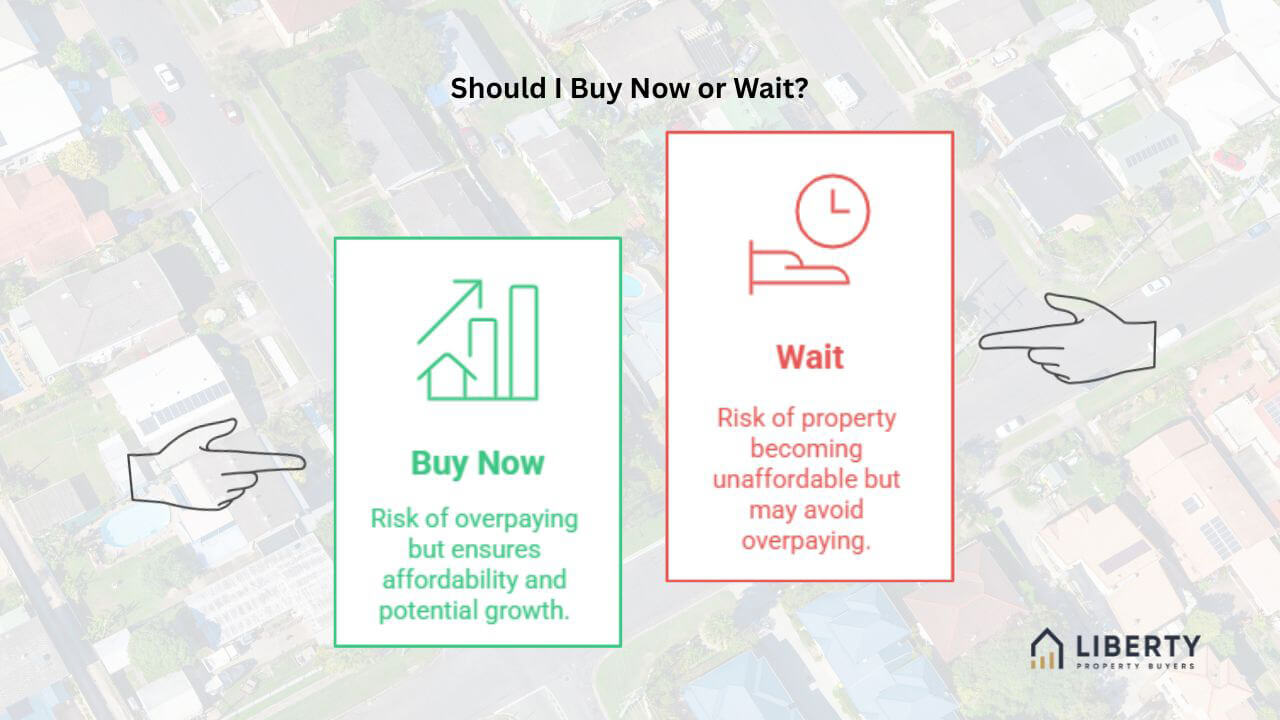
That means, for buyers, the real risk is not overpaying today. It is waiting for too long, and the property is becoming unaffordable.
If you wish to identify the markets with the biggest growth potential, it is important to work with experienced professionals who closely study and monitor property cycles and have the experience and expertise to guide you toward smart, strategic and profitable investments.
Whether you’re a first-time buyer or a seasoned investor, contact us and let our experts at Liberty Property Buyers guide you through every step.